

CFR Meaning
CFR meaning is an acronym for Conversation, Feedback, and Recognition. It is a key element that takes part throughout the OKR cycle. By implementing conversations, feedback, and continuous recognition, teams can get clarity on what initiatives to focus on to get the desired results. Furthermore, CFR code enables teams to learn from mistakes, overcome barriers, and assess how well their OKRs are doing on a regular basis.
Definition of CFR
CFRs represent the human side of OKRs — the everyday interactions that bring goals to life.
- Conversations encourage open discussions about priorities, challenges, and achievements.
- Feedback refines actions and aligns efforts with organizational goals.
- Recognition celebrates wins, reinforces positive behavior, and builds motivation.
When practiced consistently, it drive clarity, accountability, and deeper team engagement. They add depth and fresh perspectives to the goal-setting process.
What’s the Difference Between OKRs and CFRs?
While OKRs outline what needs to be achieved and how success will be measured, CFRs shape how teams communicate, learn, and improve along the way.
OKRs define measurable outcomes, while promote meaningful interactions.
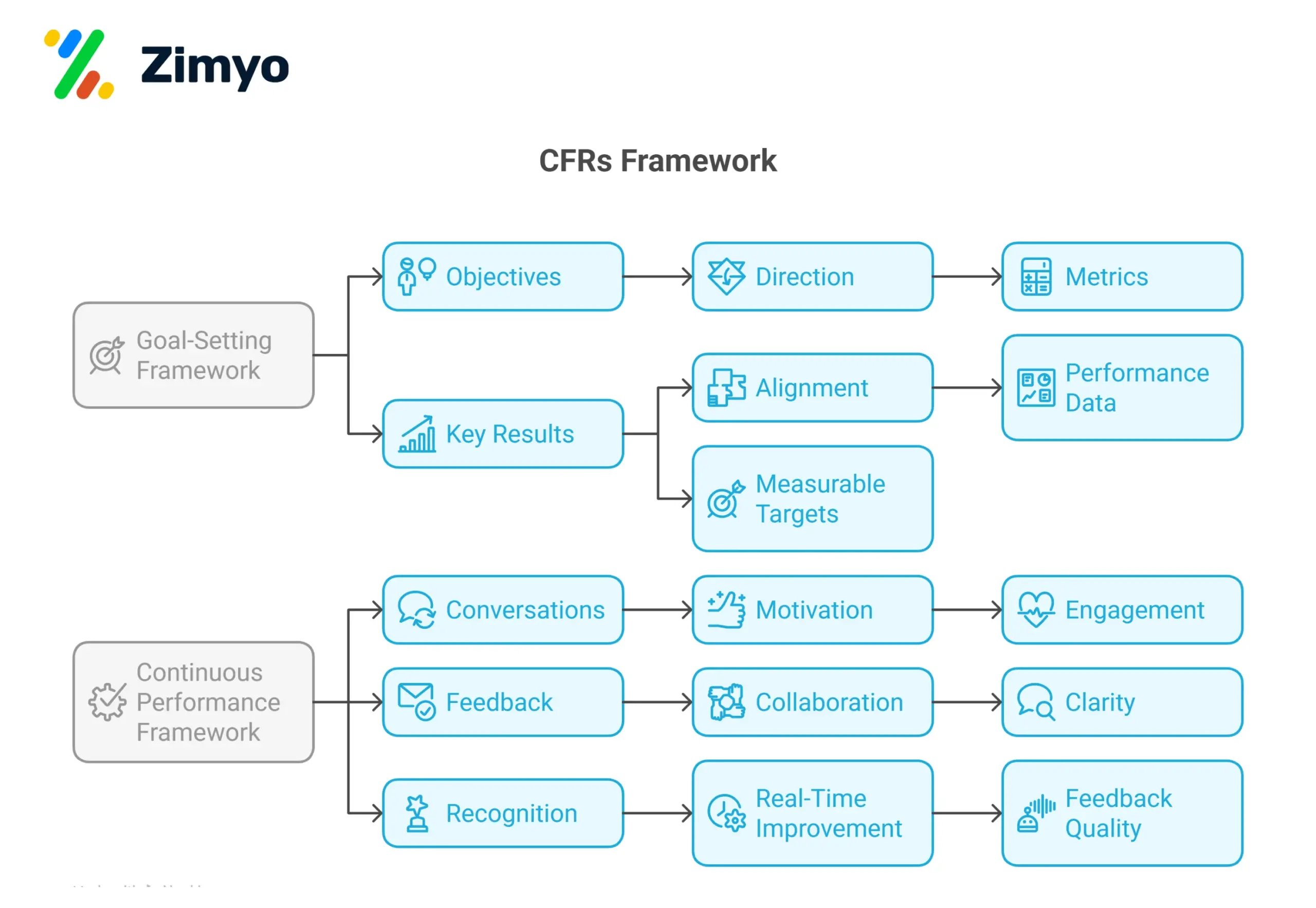
Think of OKRs as the roadmap — and CFR as the conversations that keep everyone aligned and energized on the journey.
How Do OKRs and CFR Work Together?
A strong OKR framework only truly thrives when integrated with Conversations, Feedback, and Recognition. Together, they form the backbone of modern performance management, replacing one-time reviews with ongoing dialogue, learning, and growth.
OKRs and CFR: Conversations that Move Teams Forward
Conversations are the heartbeat. Regular discussions ensure everyone understands current progress, challenges, and next steps.
Ask questions like:
- What’s going well with your OKRs?
- What’s holding us back?
- How can leadership or peers better support you?
Consistent, two-way conversations replace guesswork with clarity and keep teams aligned toward shared objectives.
CFR: Feedback that Drives Growth
Feedback transforms OKRs from static goals into opportunities for learning. Constructive, specific, and timely input helps teams adapt and continuously improve.
For instance, instead of saying, “We missed the deadline,” say, “Next time, let’s reallocate resources earlier to stay on track.”
Effective feedback encourages reflection, builds trust, and sustains a culture of growth — all essential for successful OKR implementation.
CFRs: Why Recognition Matters
Recognition fuels motivation and strengthens engagement. When employees feel valued, productivity and morale naturally rise.
Even simple acknowledgments — like, “Your detailed update made it easier for everyone to stay aligned,” — can create lasting impact.
Recognition should be ongoing, not reserved for quarterly or annual reviews. It’s about celebrating progress in real time and reinforcing positive habits.
Conclusion
Overall it is sides of the same coin — one defines direction; the other drives connection. CFRs nurture communication and collaboration. Together, they promote performance, alignment, and a culture of continuous improvement powered by feedback and recognition.
FAQs
What is CFR in OKR?
In any OKR, CFR stands for Conversations, Feedback, and Recognition-a framework that facilitates the accomplishment of goals by fostering ongoing communication, continuous feedback, and recognition.
What is CFR full form?
CFR stands for Conversations, Feedback, and Recognition.
What is Feedback and Recognition?
Feedback lets people know how they’ve done something that should be improved, while recognition celebrates accomplishments and reinforces positive behavior in real time.
What is CFR in KPI, and what does it stand for?
In KPI, CFR reports stands for Conversations, Feedback, and Recognition; this is used to enhance employee engagement and ensure that the key performance indicators are effectively met.
What is the difference between OKR and CFRs?
OKRs define what needs to be achieved and how success is measured, while CFR meaning focus on how the teams communicate, learn, and grow toward achieving those goals.